How to present so that people listen to you
How to structure a presentation, tell a story without promises, ask questions and respond honestly to objections – online and in person.

People will listen to you if your presentation has a clear structure, speaks to their situation and leaves room for questions. Instead of a flood of information and big promises, rely on a short honest story, concrete facts and a clear next step. The listener should leave understanding the offer and free to decide.
A structure that holds attention
A good presentation is not about how much you say. It is about the listener remembering what matters and knowing what comes next. A simple sequence in five steps has proved its worth.
- Introduction – who you are and why you are talking about this. A few sentences are enough, not a CV.
- Problem or question – what interests or worries the listener. If you do not know, ask before the presentation.
- Solution – what you offer, simply and without jargon. One main idea is better than five side ones.
- Evidence and terms – your own experience, verifiable facts and also what the thing requires: time, costs, effort.
- Next step – what the listener can do if they are interested, and that it is fine if they are not.
In a short chat over coffee, each step takes a few sentences. In a webinar you develop them further, but the order stays the same.
The most common mistake is to skip the second step and start straight away with the solution. The listener then hears answers to questions they never asked, and their attention drops quickly. If you first name their situation, the solution will make sense on its own. The second common mistake is a missing ending: the presentation finishes, people say thank you and nobody knows what to do next. So state the next step clearly and concretely, for example a short conversation in a few days or an invitation to a webinar.
A story without promises
People remember stories, not numbers. Tell how you came to this, what convinced you and what you struggled with. An honest story, difficulties included, comes across as more trustworthy than a perfect success.
A story, however, must not promise anything. What worked for you may not work for everyone – say so out loud. A good story has these qualities:
- It is true and embellishes nothing. If you told it to a friend who knows you well, they should not smile.
- It includes doubts – what you did not know at the beginning, what surprised you, what you had to learn.
- It does not mention income or amounts. Specific figures about earnings create expectations that nobody can guarantee.
- It does not claim it is for everyone. Say also who you would not recommend it to.
Questions that start a conversation
Questions turn a lecture into a conversation. And from a conversation you learn whether the offer really suits the listener. Ask open questions that cannot be answered with just yes or no:
- What interested you most about it?
- How do you handle this at the moment?
- What would have to be true for this to make sense for you?
- How much time could you realistically devote to it?
- What would put you off?
- What would you like to ask?
After a question, leave a moment of silence. Many presenters answer for the listener because silence is uncomfortable for them. But that is exactly when the person is thinking, and it is when they will tell you the most.
Remember or note down the answers. When you return to them later, the listener will see that you really listened, and the conversation can continue where it left off.
How to respond honestly to objections
An objection is not an attack. It is a signal that the listener is thinking and something is missing for them. The goal is not to “overcome” the objection but to help the person make a good decision – even if the decision is no.
- Listen to all of it and do not interrupt.
- Repeat it in your own words to check that you understood it correctly.
- Answer factually and truthfully. If you do not know the answer, say so and promise to find it out.
- Admit it when they are right. If someone has no time or the offer does not suit them, that is a legitimate reason.
When asked “Isn’t this a pyramid scheme?”, do not get defensive. Explain where the money in the model comes from and offer them the chance to read the terms in writing and decide in peace. When asked “How much can you earn from this?”, answer honestly that it depends on your own activity and nobody can guarantee it.
Online or in person
The basic structure applies in both cases, but each format has its own rules.
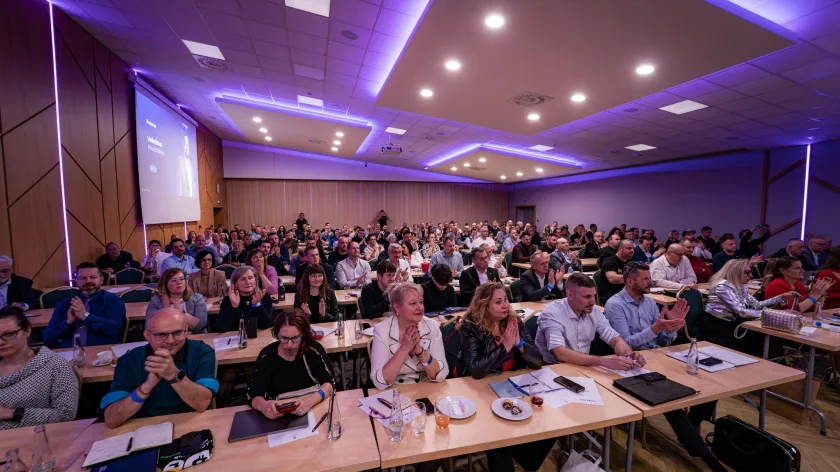
- In-person meeting – you can see reactions and adapt to them. Watch body language, do not keep looking at your phone and let the listener talk for at least half the time.
- Online meeting – attention drops faster. Shorten the introduction, turn on your camera, look into the lens and involve people with a question or a short task roughly every five to seven minutes.
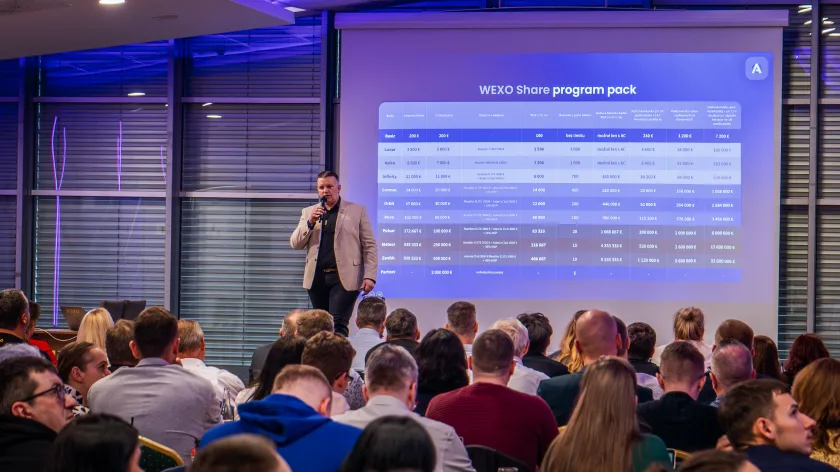
- Webinar for many people – set aside time for questions at the end and along the way, and ask someone to monitor the chat.
For an online presentation, test your equipment in advance: microphone, lighting, screen sharing and connection. A technical problem in the first minutes costs you attention that is hard to win back.
An in-person meeting has the advantage of trust, an online format the advantage of reach. The Asteria community has more than 20,000 registered users in 6 countries, so many conversations take place on a screen and often between people who speak different languages. In that case speak more simply, avoid slang and check that the other side understands you. It helps if the listener has materials in their own language, such as the Asteria website, which is available in 11 languages.
Checklist before a presentation
- I know who will be listening and what is likely to interest them.
- I can state the main idea in one sentence.
- I have rehearsed the presentation aloud at least once.
- There are few slides and each has one idea.
- The facts I cite are verified and up to date.
- I have answers ready for the most common questions and objections.
- I know what next step I will offer, for example the introductory training or a conversation with a mentor.
- For an online meeting, I have tested the equipment.
- I have the written terms to hand for those who want to read them.
During the presentation itself, speak more slowly than seems necessary, and at the end sum up in one sentence what the listener should remember.
Ethics: no pressure and no promises of income
Trust is built over years and you can lose it with a single exaggerated sentence. So set clear boundaries:
- Do not promise income, financial independence or a certain result. Results depend on your own activity and nobody can guarantee them.
- Do not push for a quick decision. Phrases like “decide today” put off sensible people and damage your name.
- Do not use luxury as an argument. Cars and holidays say nothing about whether the offer suits a particular person.
- Respect refusal. “No” or “not now” is a valid answer, and your relationship with the person matters more than one presentation.
- Speak only about what you understand. For partner products, refer to the official terms instead of your own interpretations.
How to improve
Presenting is a skill that grows with practice. After every meeting, write down what worked, what people asked about and where you got stuck. Record a rehearsal presentation and watch it – you will see things you do not notice while speaking.
At Asteria you can use the introductory training in the members’ area, webinars, events and conferences, where you can see how others present. Ask your mentor, that is, the team member who invited you, to listen to your presentation and give you honest feedback.
Want to know more?
See how to get started with Asteria and what we give you at the start.
How to start